
Built for multi-entity dental groups that need more than bookkeeping
Multi-location dental groups and DSOs are no longer operating like traditional single-practice businesses. They are managing multiple legal entities, provider compensation models, lender reporting, acquisitions, and margin pressure all at once.
Sage Intacct gives growing dental organizations real-time visibility across locations, providers, payers, and entities, without rebuilding the close in spreadsheets every month.
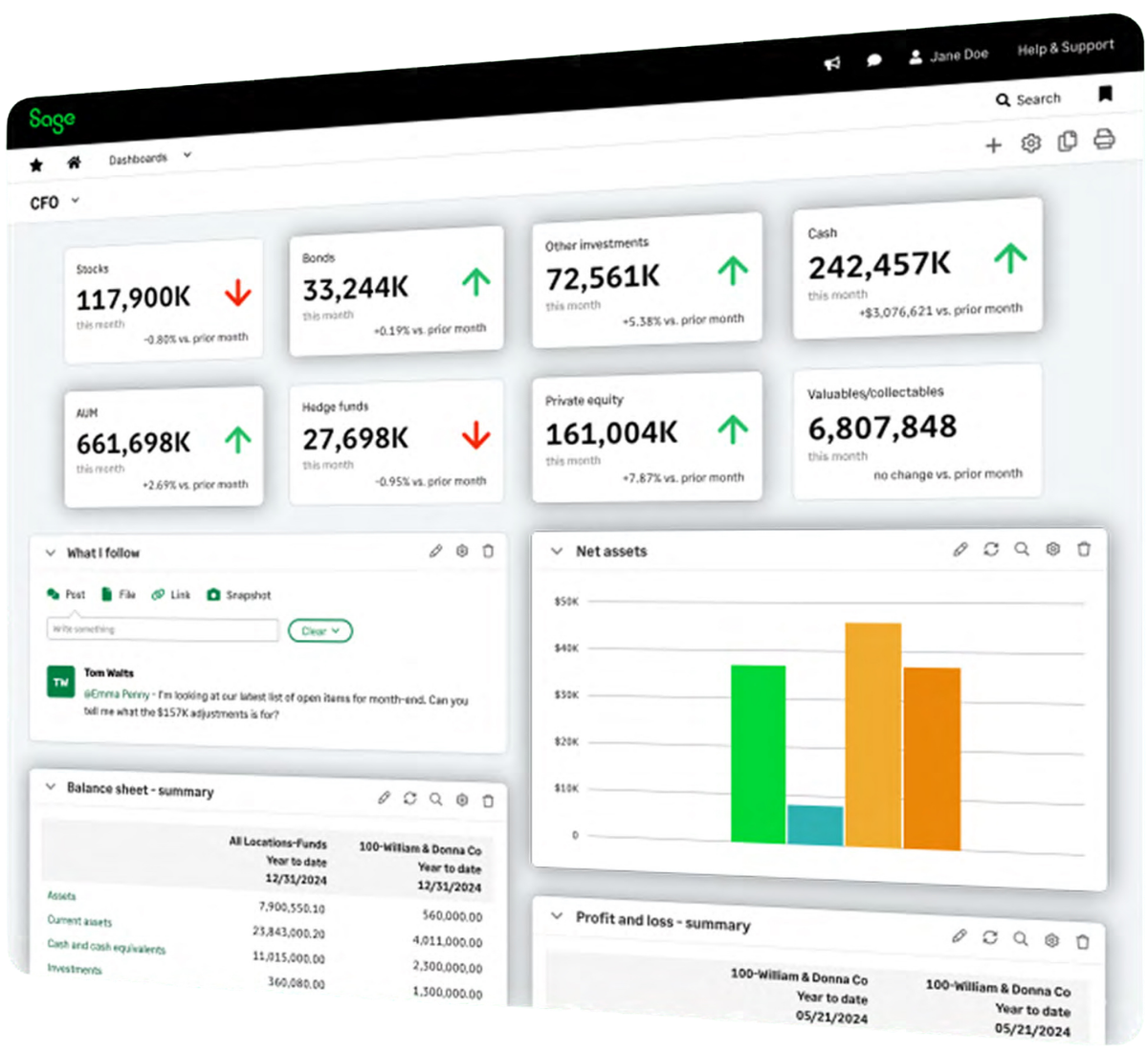
Finance infrastructure for growing dental groups
What changes when a dental group becomes multi-entity
Growth changes the operating model. Clinical care stays local, but finance, procurement, HR, reporting, and integration become centralized and much more complex.
More entities to manage
Multiple legal entities, professional corporations, real estate entities, bank accounts, and intercompany flows.
Faster reporting expectations
Boards, lenders, and PE partners want cleaner closes, consistent packages, and better governance.
Higher labor pressure
Labor is now the largest cost line, and provider compensation needs more transparency.
Shorter integration windows
New practices need to be onboarded quickly, often in 30 to 60 days, not quarters.
Why dental groups choose Sage Intacct
Sage Intacct is built for organizations operating across multiple locations and entities that need more than basic bookkeeping.
What finance leaders are looking for
- Real-time visibility into profitability by location, provider, and payer
- Shorter close timelines and less manual consolidation work
- Better lender and investor reporting readiness
- Faster onboarding of acquired practices
- Stronger compliance, controls, and audit trails
- Scalable financial operations without adding headcount at the same pace as growth
Common finance problems in growing dental groups
The issue is rarely just one bad report. It is usually a mix of margin compression, fragmented systems, manual closes, weak provider economics visibility, and M&A strain.
Margin compression
Supplies, labor, and compliance costs rise while reimbursement stays flat or declines. In a 15% margin environment, small inefficiencies become material.
Payer pressure
Without payer-level profitability reporting, groups risk dropping profitable contracts and keeping unprofitable ones.
Provider-level profitability disputes
Most accounting systems cannot easily produce provider-level P&Ls, which makes compensation discussions harder and retention riskier.
Manual multi-entity close
Finance spends too much time collecting trial balances, reconciling intercompany entries, and fixing spreadsheets after the fact.
M&A integration complexity
Each acquired practice needs chart mapping, entity setup, intercompany rules, and day-one reporting if growth is going to create value quickly.
Compliance and governance pressure
Capital providers increasingly expect five-day closes, audit-ready reporting, approval workflows, and stronger financial controls.
Core capabilities for multi-entity dental operations
Modern dental finance needs a platform, not a patchwork. Sage Intacct gives growing groups the foundation to scale without rebuilding reporting every month.
Multi-entity financial management
- Support for unlimited entities
- Automated intercompany eliminations
- Consolidated reporting in real time
- Standardized charts of accounts
Dimensional reporting
- Location
- Provider
- Payer
- Service line
- Department
Dashboards and KPIs
- Executive dashboards
- Role-based reporting for finance and operations
- Faster insight into what is driving margin
Budgeting and forecasting
- Multi-entity budgets
- Rolling forecasts
- Scenario modeling for growth and acquisitions
Automated close
- Continuous reconciliation throughout the month
- Built-in approvals and review workflows
- Faster, repeatable close cycles
Dental ecosystem integrations
- Practice management systems
- Payroll platforms
- Procurement and AP automation tools
- Banking and planning tools
What modern dental finance looks like
Strong dental finance functions stop acting like reporting factories and start acting like operating infrastructure.
Typical pain point:
“We know the group is profitable overall, but we cannot clearly see which providers, locations, or payer relationships are creating or destroying margin.”
Standardized entity structure
Entities are set up with consistent charts, ownership relationships, and intercompany rules.
Continuous close mindset
Transactions are validated throughout the month so close becomes confirmation, not reconstruction.
Dimensional profitability
Leadership can evaluate performance by location, provider, payer, service line, and department instead of relying on blended averages.
M&A-ready finance
New practices can be onboarded faster with predefined setup, reporting, and governance structures.
Built for ownership structures, lender pressure, and growth
Growing dental groups often manage professional corporations, real estate entities, centralized back-office teams, and ongoing acquisition activity. Finance needs to keep up with that reality.
What Sage Intacct supports
- Entity-level controls
- Intercompany accounting
- Ownership structures
- Consolidated financial statements
- Audit-ready reporting
- Role-based access and transaction trails
Why this matters for dental groups
- Board and lender reporting becomes more consistent
- Provider compensation becomes easier to explain
- Acquisition onboarding gets faster
- Manual spreadsheet risk goes down
- Finance gets back time for analysis instead of reconciliation
Customer proof
Village Family Dental, a multispecialty group spanning 11 locations and 3 ambulatory surgery centers, used Sage Intacct to manage multi-entity consolidation and support rapid growth.
Results included
- Improved visibility into location and provider profitability
- Shorter monthly close cycles
- More consistent board and lender reporting
- Faster onboarding of acquired practices
- Reduced reliance on manual spreadsheets
What that means in practice
The real win is not just speed. It is better margin visibility, faster decisions, and a finance team that can support growth instead of always trying to catch up to it.
Frequently Asked Questions
What kinds of dental organizations is this page for?
This is built for multi-location dental groups, multi-entity dental practices, and DSOs that need better financial visibility and a stronger operating foundation.
Why is multi-entity finance harder for dental groups?
Because each new practice or entity adds new bank accounts, payroll feeds, reporting structures, provider compensation logic, and intercompany activity. Manual systems do not scale well with that.
Can Sage Intacct report by provider, location, and payer?
Yes. Dimensional reporting is one of the core strengths of the dental positioning, because it helps leaders move beyond blended averages and see real unit economics.
Is Sage Intacct a good fit for acquisitive dental groups?
Yes. It is especially relevant when new practices need to be onboarded faster, consolidated sooner, and reported consistently within tighter integration windows.
What systems does Sage Intacct connect with in dental?
Common integration points include practice management systems, payroll providers, procurement and AP automation tools, banking systems, and reporting or planning tools.
What is usually the first sign a dental group has outgrown its current setup?
The close gets longer, manual consolidation work increases, provider and payer profitability become hard to see, and finance spends more time assembling reports than guiding decisions.
Still running multi-entity dental finance on spreadsheets?
Let’s talk about whether Sage Intacct is the right next step for your dental group.